
Audio Mastering That Makes Your Project Translate
Updated: Nov 14
A powerful mix can still lose its impact in the final mile. The vocal that felt present in the studio may disappear on a phone speaker. The music that supported a film scene may crowd a line of dialogue. The audiobook chapter that sounded warm in headphones may fatigue listeners during a long commute. Audio mastering is the focused finishing stage that helps creative work hold together wherever and however it is heard.
For authors, filmmakers, entrepreneurs, and independent artists, that final polish is not a cosmetic extra. It is part of presenting intellectual property with the care it deserves. A strong story, a memorable brand, or an original score needs sound that supports the experience rather than calling attention to technical distractions.
What Audio Mastering Actually Does
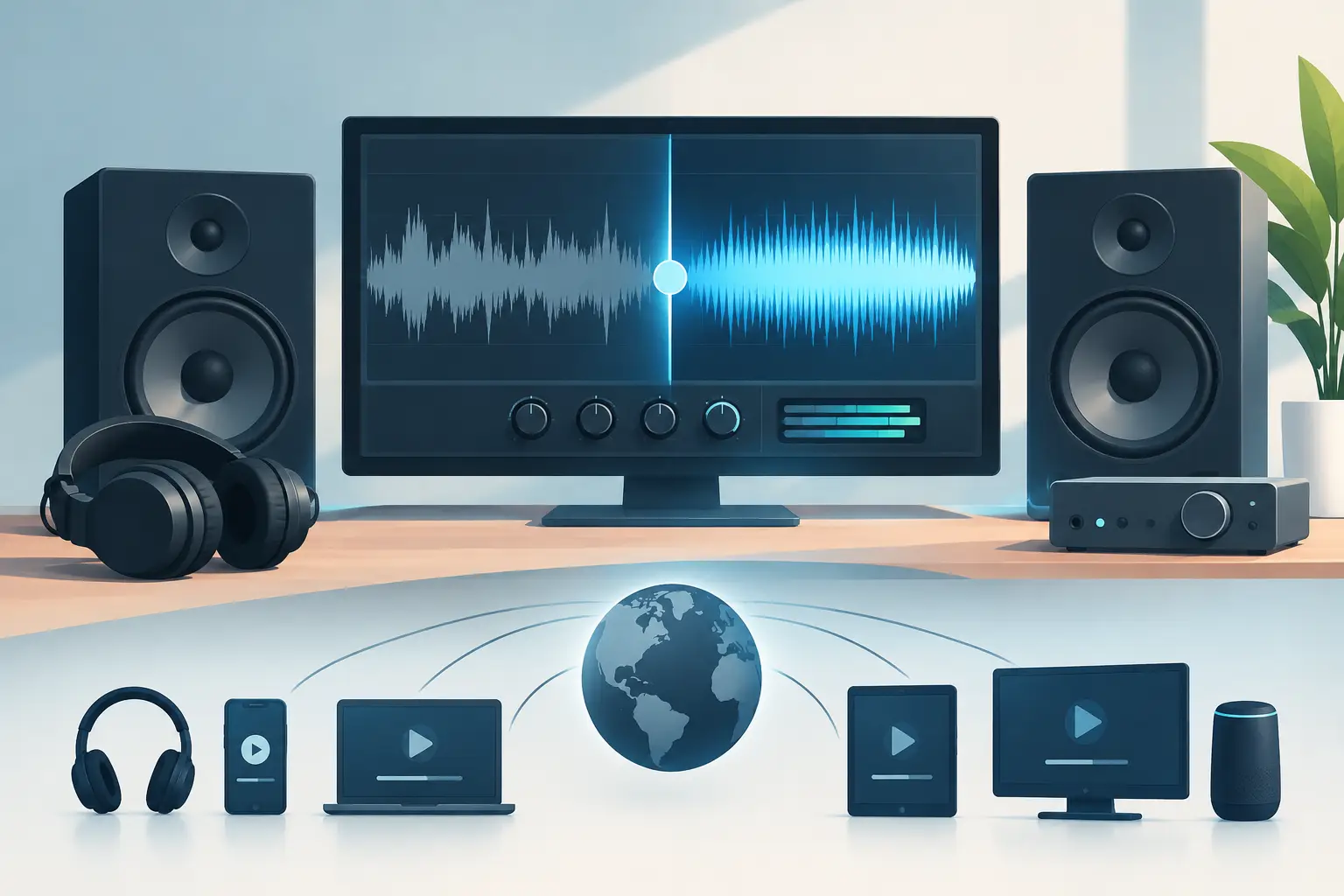
Mastering is the final quality-control and enhancement process applied after recording, editing, and mixing are complete. Its purpose is to create a balanced, consistent, release-ready sound that translates across playback environments. That can include earbuds, car speakers, televisions, studio monitors, laptops, streaming platforms, and theater systems.
A mastering engineer listens to the finished mix as a whole, rather than rebuilding the individual parts. They may adjust tonal balance, control peaks, refine stereo width, manage loudness, reduce minor noise, and prepare correctly formatted deliverables. The goal is not to make everything louder. The goal is to make the work feel intentional, clear, and emotionally effective.
That distinction matters. A mix is where a producer or mixer decides how the vocal relates to the instruments, how effects shape a scene, or how sound elements create space. Mastering respects those decisions while identifying final-stage issues that can prevent the project from performing well outside the production room.
Why Audio Mastering Changes the Listener's Experience
Listeners may not know why a polished project feels more professional, but they recognize the result. They stay with an audiobook because narration is even, intelligible, and comfortable. They trust a promotional video because the voiceover, music, and sound effects feel unified. They connect with a song because the energy remains intact from the opening note through the final fade.
Poorly finished audio creates friction. Harsh high frequencies can make a listener lower the volume. Uncontrolled low end can turn a confident music cue into a muddy blur. Abrupt shifts in level between scenes or chapters can pull an audience out of the story and force them to adjust their device.
For a creator building a catalog, consistency also becomes part of the brand. A series of videos, a podcast season, an audiobook collection, or an artist's releases should sound like they belong to the same professional standard. The sound does not have to be identical. It does need to feel cared for.
Audio Mastering for Music, Film, and Audiobooks
The right approach depends on the medium and the intended audience. A one-size-fits-all master rarely serves every creative project equally well.
Music releases need impact without fatigue
For singles, albums, scores, and branded music, mastering helps establish tonal character and perceived energy across the full release. If one track is bright and aggressive while the next is quiet and dark, that contrast may be artistically correct. It may also need thoughtful level and tonal management so the listener experiences a coherent body of work.
There is a trade-off between loudness and dynamics. Excessive limiting can make a track seem immediately forceful, but it can also flatten the movement and emotional lift that make music memorable. A master should preserve the character of the production, especially in cinematic, orchestral, acoustic, and story-driven work where contrast carries meaning.
Film and video need clarity in service of the story
In visual media, sound is inseparable from storytelling. Dialogue usually carries the highest priority, but the soundtrack must also make room for score, ambience, transitions, sound design, and intentional silence. Final mastering helps ensure that the audience hears what the scene needs them to hear.
A dramatic score can heighten a reveal. It should not compete with a key line. A branded video can feel energetic and polished, but not if music masks the call to action. The best final audio work serves the image and the message rather than showing off processing for its own sake.
Audiobooks need comfort, control, and continuity
Audiobook listeners spend hours with a narrator. That makes consistency essential. A finished audiobook needs controlled levels, clean edits, reduced distractions, and a natural vocal tone that remains easy to hear over time.
Mastering can address subtle imbalances between recording sessions, chapter changes, or passages with different vocal intensity. It also helps prepare files to meet distributor specifications. Technical compliance matters, but the listener's experience comes first: a well-finished narration allows the author’s world, ideas, and characters to take center stage.
The Mastering Process Starts Before the Final File
The strongest masters begin with strong source material. No final-stage process can fully rescue clipping, severe background noise, poor microphone technique, or a mix that has not been approved creatively. Mastering improves and unifies. It is not a substitute for recording, editing, or mixing.
Before sending a project for mastering, creators should confirm that the mix reflects the intended artistic direction. Listen for competing elements, unwanted distortion, awkward edits, excessive effects, and inconsistent volume. If possible, review the work on more than one playback system. A problem that is hidden on premium studio monitors may become obvious on earbuds or a small speaker.
Leave adequate headroom in the mix and avoid applying aggressive processing simply to compete with commercial volume. Provide the highest-quality source files available, along with clear notes about the project’s purpose, audience, reference tracks if applicable, and planned distribution. Those details give the mastering process a creative target, not just a technical assignment.
What a Professional Deliverable Should Include
A professional finish is more than one exported file. Depending on the project, deliverables may include a high-resolution master, versions prepared for streaming or video, properly named chapter files, alternate edits, and files matched to a distributor’s specifications.
For filmmakers and entrepreneurs, it can be useful to plan for the complete content life cycle. A long-form film, book trailer, social-media cut, promotional reel, and website video may require different versions. Preparing for those uses early reduces last-minute compromises and helps maintain the same sonic identity across the campaign.
This is where an integrated creative partner can save time. When the people shaping story, edit, score, design, and final sound can communicate directly, decisions remain connected to the original vision. David F. Smith Eclectic LLC approaches creative production from that full-picture perspective, helping projects move from concept to professionally finished media.
Common Mistakes That Undercut a Finished Project
One common mistake is treating mastering as a button, preset, or last-minute upload requirement. Automated tools can be useful for quick references, but they do not understand the dramatic intention of a scene, the voice of a narrator, or the arc of a musical release.
Another is chasing volume at every cost. Platform normalization means louder is not always more powerful. If dynamic range has been sacrificed, the project may simply sound smaller, harsher, or more tiring once playback levels are adjusted.
Creators also sometimes approve final sound on only one device. A better practice is to check the release in realistic settings: headphones, a car, a television, a phone, and a dependable speaker system. The objective is not perfection on every device. It is a clear, reliable experience across the places your audience actually listens.
Give the Final Stage the Attention It Earns
Audio carries authority. It tells an audience whether a project feels intimate, cinematic, credible, energetic, or unfinished before they have time to explain that reaction. When music, narration, dialogue, and sound design receive proper final attention, the technical work disappears and the creative work remains.
Give your finished project time for objective listening, thoughtful revision, and professional preparation. The result is not merely a louder file. It is a release that carries your voice, your story, and your creative standard with confidence into the world.


Comments